

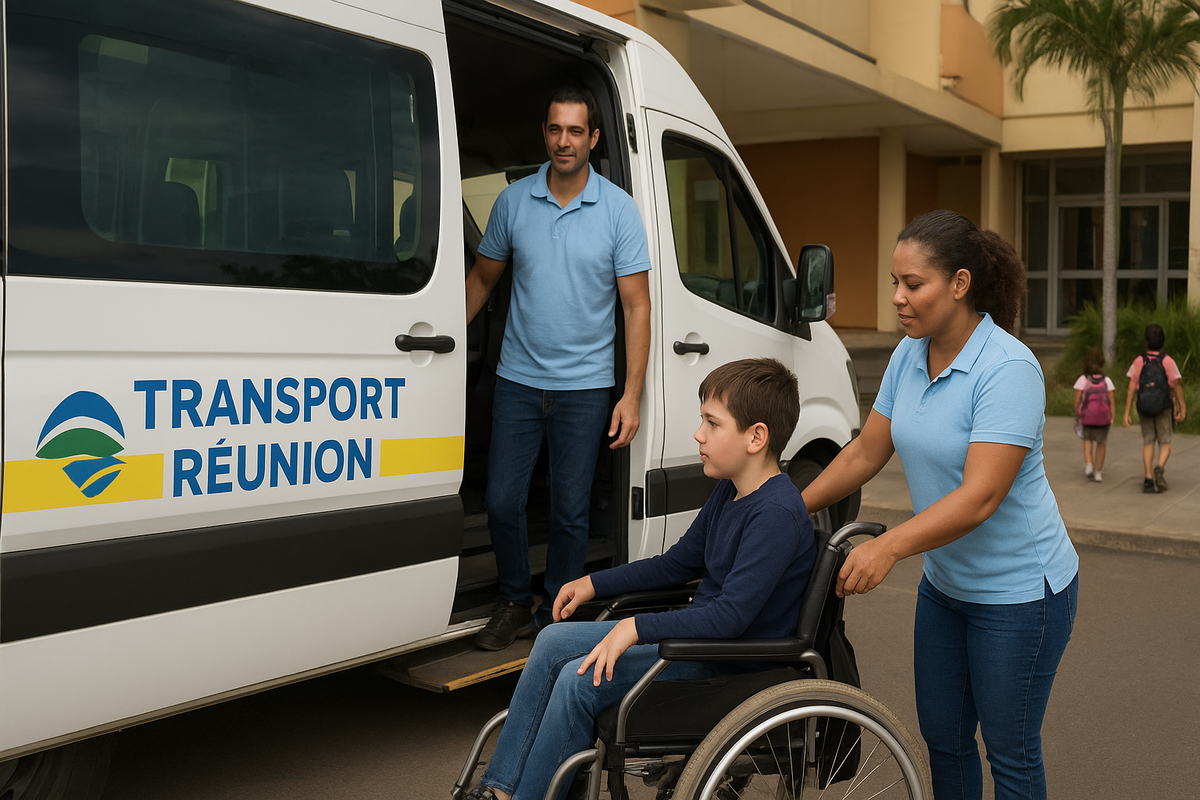
On Réunion Island, ensuring inclusive education requires addressing not only classroom access but also mobility. Reliable and adapted school transport is essential for students with disabilities, allowing them to attend school or university safely and on time. Local authorities and transport providers have developed a framework to ensure that students with special needs receive appropriate support.
Inclusive School Transport: The Framework
The Departmental Council of Réunion Island is responsible for organising school transport for students with disabilities. A dedicated scheme allows children and young people, from preschool to university, to access transport if conventional public transport is not suitable for them. Families can benefit from fully organised transport services or receive financial assistance to cover the cost of private transport when necessary.
Eligibility is determined through documentation from the local disability authority, and applications are typically renewed annually. This framework ensures that students with disabilities can attend their educational institutions without being limited by mobility challenges or geographic location.
Practical Support and Service Providers
Transport providers on Réunion Island also play a crucial role in supporting students with disabilities. Many operators offer vehicles equipped with ramps, wheelchair-accessible seating, and other adaptations to ensure safe and comfortable travel. These services are integrated with the departmental transport scheme, allowing eligible students to receive organised transport to and from school.
Specialised vehicles and adapted routes are particularly important in rural or remote areas, where public transport options may be limited. This coordination ensures that all students, regardless of where they live, have access to education.
Why It Matters: Educational and Mobility Inclusion
Accessible school transport contributes to inclusion in multiple ways:
- Equal Access to Education: Students with disabilities can attend school and university on equal terms with their peers.
- Geographic Reach: Transport services overcome the island’s challenging terrain and dispersed population, ensuring coverage for remote areas.
- Support for Families: Reducing the logistical burden on families helps children attend school regularly and safely.
- Social Integration: Mobility allows students to participate fully in school life, extracurricular activities, and community engagement.
Challenges and Considerations
While the system is robust, there are challenges to ensure full effectiveness:
- Administrative Requirements: Families must provide documentation and renew applications annually.
- Logistics in Remote Areas: Ensuring timely, accessible transport in rural or mountainous zones can be complex.
- Awareness: Families need clear information about eligibility and procedures to access the service.
- Comprehensive Inclusion: Transport is just one aspect; accessible infrastructure and adapted teaching are also crucial.
Conclusion
The school transport scheme for students with disabilities on Réunion Island demonstrates how targeted mobility support can enhance inclusive education. By providing adapted vehicles and organised services, the system ensures that students with disabilities can attend school, participate socially, and achieve academic success. Accessible transport is a key factor in fostering equality, autonomy, and full integration into community life.
Pour ceux qui prévoient un séjour à La Réunion et souhaitent allier mobilité adaptée pour les enfants avec des activités enrichissantes, il est utile de consulter notre article Comment profiter pleinement de votre séjour à La Réunion : entre excursions, détente et soirées cinéma. Il explique comment organiser au mieux vos déplacements sur l’île, en combinant visites, détente à la plage et même soirées cinéma. Ces conseils sont particulièrement précieux pour les familles et les étudiants bénéficiant du transport adapté, car une planification efficace permet de gagner du temps, de voyager en toute sécurité et de profiter pleinement de toutes les expériences que l’île a à offrir.